Most newborns fall asleep as soon as they ride around in a bit in a car. Take that to your advantage for a great date night.
Prep work:
Print off a personality test for both you and your spouse.
Grab a clipboard and pen so you can take the test together.
Prepare all the things you will need for your baby, and give them a nice big feed before you set out on your trip.
Date Idea:
Drive to a nearby canyon or somewhere that has beautiful fall leaves. On your drive to the canyon take the personality quiz, passenger writes the answers to the drivers personality test! As you take your tests together talk about why you chose the answers you chose.
While in the canyon search for the Prettiest tree, the scariest tree, and cutest tree.
If your baby gets fussy stop somewhere safe and feed them for a while, then make your way back home!
Variant Ideas:
This is a great date to do when you want to have some good one on one conversations with your spouse but can’t find a baby sitter. Use the car to your advantage with a newborn! If it’s not fall where you are come up with other things you can look at such as Christmas lights, or drive to an expensive part of town and admire all the fancy houses. You can use the same voting criteria to talk about which houses were the prettiest, scariest and cutest. Or you can come up with your own categories!
There are two ways you can determine how much you need to save for Christmas. One, is by using my general rule to save 1 percent of your yearly take home pay. For example, if you make 50,000 dollars a year that means you need to save up 500 dollars for the holidays. You may find this number to be a bit high or a bit two low for you though so in that case use the second strategy.
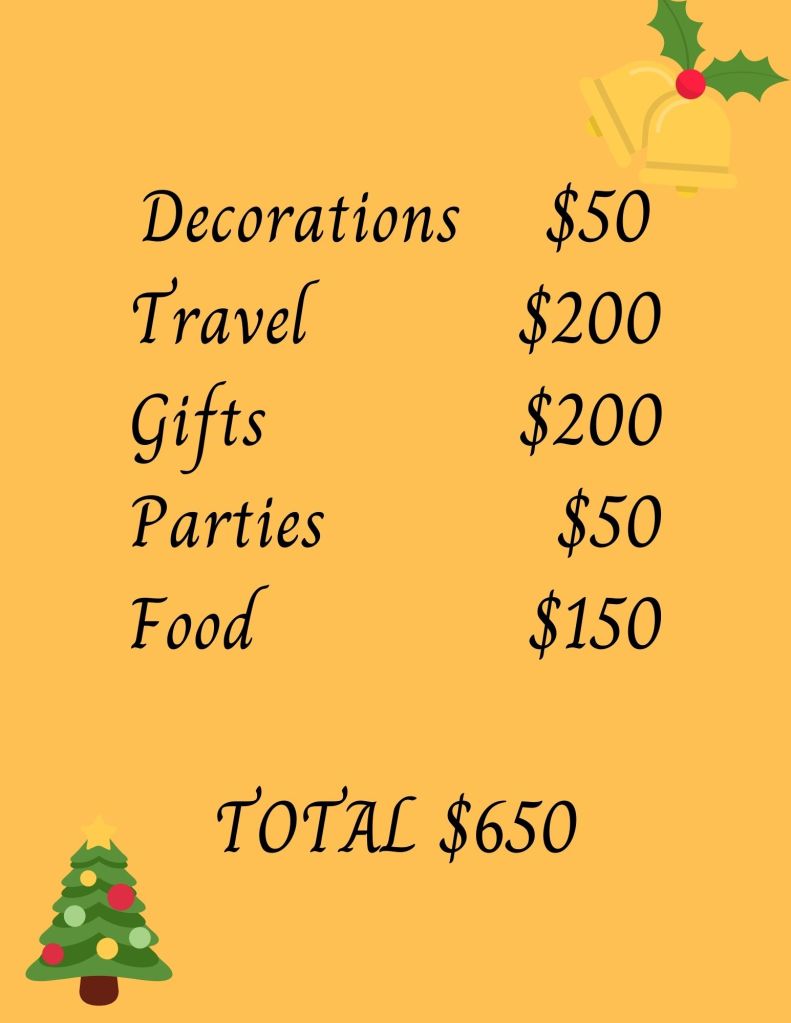
Go through and look at what you spent on Christmas last year. This includes things like food, decorations, travel, gifts, etc. If you don’t have these records with you anymore you can just make an estimate on how much it cost. This is the base number you need to save up for this Christmas.
Remember to be realistic with this goal. If you know you are going to spend 1,000 dollars for Christmas don’t plan on spending 400 this year. It’s important to be realistic with your goals and save the amount that you will need. If you don’t this is where overspending can happen. Plan for what you need.
Brainstorm all the different things you will need to spend for Christmas
Write down all the different categories you need to spend for Christmas such as travel, gifts, wrapping paper, decorations, food etc. Then, go through and divide out your budget given above and decide how much you will spend in each of these categories.
For example, how much will you realistically spend on travel this Christmas? Do you need to save up for a plane ticket or do you need to save up for a 2 hour drive? It’s important to place your money where you need it most.
Start saving- Take a bit of money out of each pay check
Take the number you’ve decided on for Christmas expenses and divide that by the number of months you have left till Christmas. This number is the number you need to save up each month to meet your Christmas financial goal. If you get paid every other week, determine how many pay periods you will have till Christmas and divide by that number.
Take this number out of your pay check every time you get paid. Create a new bank account at your bank and set up an auto withdraw with the amount determined above to go into this bank every pay period.
You will find by budgeting this way makes Christmas an affordable time of year. There is no need to charge everything to credit cards if you plan in advance for your Christmas expenses and then stay to that budget.
I had a roommate that came up to me one day and asked, “How do you manage to seem so calm? We make the same amount of money, pay the same amount of rent, and yet you never seem to be worried about money.” And the truth was, I wasn’t worried about money. I was doing completely fine but I couldn’t explain to her at the time how I was able to do it. I was only working an average of 20 hours per week (sometimes more sometimes less) being paid 7.50 per hour and receiving about 30 dollars in tips a month. Why was she struggling so much and I was completely fine?
Upon further analysis I learned that the way we treated our money was extremely different, and a big portion of it had to do with prioritization.
Imagine you have a jar and in it you need to put large rocks, smaller rocks, and sand in it. You know it’s possible to fit everything in the jar but it has to be done in a certain order. If it’s not, not everything will fit. So you put the big rocks in, then the smaller rocks, then the sand. The big rocks represent the things that are most important to you, these are things like family, work, and school. Smaller rocks are things that are still important but maybe not quite as big of a deal. And the sand is random things like surfing the internet and relaxing. All of these things are important but they don’t fit if you try and add them in in a different order.
When my roommate received her pay check she started spending it immediately. She spent it on the sand stuff like cute swimsuits and new beauty products. Then she realized she needed more toilet paper and shampoo, which are the small rocks, then the end of the month came and she needed to pay rent and she needed food (these were the big rocks in her financial budget.) But she didn’t have enough money for them. She’d already spent all her money. So she would ask other people to help her cover rent, and buy her food. And then the cycle would start over again next month.
It is important in what ever budgeting system you use that you always, always, always, put the big rocks first. Sit down and determine what they are. For my specific situation rent including utilities was 200 dollars a month. (I shared an apartment with 6 other girls and we split the costs.) I was single with no one else to support, and was still young enough to be covered on my parents insurance.
When I received a pay check I took care of my big rocks first. I took 100 dollars of my pay check and saved it for rent. I took 10 percent of my paycheck and gave it to my church, and I took another 10 percent of it and put it in a savings account. I designated everything that I received as tips from my work to be my play money. This was the money I used to go to movies with my friends, and save up to buy that cute jacket i’d been wanting to buy. The last bits of money I had were spent on food and household supplies.
Once all the main priorities in my life were full I was able to live comfortably and not worry about when my next paycheck was coming. I had fit everything important in my jar and was content with my lifestyle.
I owe a big part of being able to live comfortably on such a low wage to the fact that I knew I had some savings I could pull from if times got tough. That 40 ish dollars I saved each month soon began to add up and became a buffer for the times when I didn’t work enough hours at work. I rarely accessed it, but when I did it was because I really needed it.
My point in sharing this story is to show how important it is to prioritize where your money is going. This is why you hear budgets being stressed all the time. This is a physical way to prioritize where your money is going. If you can do that you’re already one step ahead of the game. You can live on a lot less than you think you can. When you make room for the most important things first, the rest falls into place.
Have you ever found that around Christmas time you have a bunch of people to buy gifts for and no idea what to get them? Do you feel bad buying a bunch of gifts out of obligation rather than because you want to give? Here are some strategies to buy well thought out gifts, and enjoy the process of gift giving again.
1. Make a list… and check it twice…
Write down the names of the individuals that you’re planning on giving gifts to. Next to their name write out 3 columns, “Things they want”, “Things they need,” “Things they like.”
Name
Wants
Needs
Likes
Larry
a Red Ford Mustang
a new pair of sun glasses
cars, fly fishing, football,
Abigail
More makeup
Painting nails, running, playing the piano,
Yvette
A new bed, new pair of running shoes
Anything health and fitness related,
Brainstorm everything you know about these individuals in the 3 categories. Does cousin Larry always talk about how one day he wants to buy a Red Ford Mustang to “impress all the pretty girls”? Write that down in the wants category. Do you know that your sister-in-law Yvette loves anything to do with health and fitness? Write that down.
2. Learn more through conversation
Next time you are around these individuals actively listen for more information to add to your 3 categories. You’d be surprised how often people talk about what they like, want, and need in normal everyday conversations. Remember the things you learned and write them down as soon as you get the chance. I like to keep a list in my phone so I can add to it quickly before I forget. Did they say they like Mt. Dew? Write that down! Did they say their sunglasses broke last week? Write that down. The more specific in conversations you can get the better. You know Abigail likes makeup but what kind? Ask her about it. Don’t worry right now if it’s something you can buy for them or not, just gather information.
After you have gathered a fair bit of information, take each item on your list and think of how you could turn that into a gift. For example, Larry really wants a Ford Mustang but you don’t have the money to buy him one. You could, however, book a Ford Mustang from a rental company for a day and give that to him as a gift. You could also buy him a toy Ford Mustang with his favorite candy attached to the car saying “I bought you your Mustang so you can impress all the ladies.” This is a funny gift, but also well thought out and it shows you care.
Name
Wants
Wants, gift idea
Need
Needs, gift idea
Likes
Likes, gift idea
Larry
Red Ford Mustang
Ford Mustang rental for the day
New Sunglasses
New Sunglasses
Cars, fly fishing, Football
A new set of fly fishing bait, tickets to a car show
Abigail
More Makeup,
Mary Kay Makeup
Yvette
Anything health related
A new blender
With any new skill it takes time to develop but as you continue learning about the individuals around you, you will not only find gifts they love but you’ll develop habits to create deeper relationships. Receiving gifts like this are meaningful because it shows how much you care. It shows that you were actively listening them and remembered things that were important to them. That can make anyone feel special, and loved.
3. Harmonize what you would like with what they would like
Have you ever gotten a gift from someone and thought “Yep, that’s exactly what THEY would want… but not necessarily what I want…” or have you received a gift and thought “Wow everyone thinks I like this… but I really don’t.”
When giving gifts there will always be a bias on what we would want vs. what they would want. Normally people only pick one side when giving gifts. Meaning, they only buy things they would want or they only buy things their friend would want. I’ve found, however, if you buy something you both would want, the receiver of the gift always likes the gift more.
Keeping thoughtful gifts within your budget
1. Decide on your budget
Decide how much you want to spend on the individuals on your list. Work within that framework and find a gift that matches it. You really don’t need to spend a lot at all to give a thoughtful gift.
2. Go in on the gift with other family members
If there is something you know your friend/family member would love, but it’s out of your budget, ask other people that are important to this person if they would be willing to split the costs and you can go in on the gift together. For example Larry’s Sports car rental may be 100 dollars for a day but you only have 30 dollars budgeted for him. You can ask 2 other people important to Larry if they would like to split the costs with you. That way each of you pay around 30 dollars, and Larry get’s a memorable gift from 3 of his friends instead of just one.
3. Keep a Christmas gift box
Throughout the year watch for sales for the gifts on your list. Black Friday may have the best sale on your item, but sometimes buying it on clearance in April will give you a much better deal. Buy candy when it’s on clearance from Halloween. Buy Clearance items when Christmas is over and save those gifts for next year. When you gather your gifts put them all in a box in a central location you will remember. Make sure you remember the location of this box and that you write who you plan to give the gift to. You can save a lot of money by finding discounts and clearance items at non-Christmas parts of the year.
Be careful about buying “need” items to early
When my husband and I were dating, I bought him gifts in advance on 3 separate occasions that I knew he really wanted. He would inevitably end up buying what I already bought him right before the day I was planning on giving him the gift. I soon realized that the gifts i bought for him were things he “needed”. If you buy a gift that someone needs too early in the year, you may find that by the time you give them the item, they have already purchased it.
For acquaintances
There are inevitably people on your Christmas list that you don’t get to talk to as much and don’t know a lot about. For these people I either buy/make a treat for them or make something homemade. Usually if this is a person you don’t know that well, the simple effort of getting them something shows you care about them. If this is someone you should know pretty well it might be bring to light the fact that you need to get to know them better and you can apply the strategies above to do that.
Final thoughts
Giving well thought out gifts can change your mindset and how you interact with people. You start to give because you care, and not because you feel obligated to give a gift. You’ll even find as you apply these techniques that you become a better listener and develop deeper relationships. Giving gifts can truly be a joy and a fun challenge. People will notice when you think through a gift, and it can be surprising how much that means to them.
It is hard to sift through all the diets we have learned about on the internet, and most of us know diets aren’t sustainable over the long term. So, how do you find a way to create sustainable weight loss? In our last article we talked about creating habits for sustainable weight loss. This week we will focus on ways to create sustainable weight loss.
Control portion size
A big part of the reason so many Americans are overweight is because of our portion sizes. We assume we need way more to eat than we actually do. This can happen for a lot of different reasons. We over eat because we are bored, want to eat more of the food for taste, don’t know how much we need, or from having social pressures.
For these reasons it’s important to be able to find your satisfied point. This is the point during eating where you no longer feel hungry but you haven’t passed the “full” or “overstuffed” feeling yet. It’s good to consciously examine this while your eating so you can learn to find your satisfied point. This may mean limiting other distractions while you eat so you can focus on eating.
So many of our food problems come from the mind, so it is good to get a clear idea of why you might overeat. Write down some of the reasons you eat more than you need and then go through and research solutions you can take to avoid those situations. Here are a few examples to get you started.
Overeating at restaurants
When at a restaurant split your food in half before eating. Plan that this is what you will eat here and the rest will be for take out. If someone asks why you aren’t eating more just tell them you are “super full”.
A friend offers you a cinnamon roll
It is okay to say no. If you have a hard time with that you can also say i’m not hungry right now but I can save it for later. If the cinnamon roll is worth it to you, you can eat it later. If the cinnamon roll is not worth it to you, you can through it away later.
Chose food wisely
I had a friend who went on a diet where she didn’t eat sugar, and flour (of any kind). This sounded like a fun diet so I tried it for a week.
While it worked great for her, it didn’t work for me. It started to create this mentality that every time I slipped up and snacked on sugar I was hurting my body. The stress that this created was terrible and probably caused more harm to my body than it solved.
While elimination diets work for some, and need to work for others (People with specific allergies). I found out pretty early on that it didn’t work for me. Then I learned something great, you can eat eat the things you love and still lose weight.
There are foods and then there are better choices. A 20 calorie lollipop doesn’t have the same nutritional value as 20 calories of spinach. You can, however, still lose weight if you eat a lollipop instead of spinach. If you are staying within the calorie limit set and balancing it with the proper macro-nutrients it is okay to still eat the things you want.
You don’t need to beat yourself up. Having a mentality that some foods are “bad for you” can cause a lot of psychological problems. My one caveat to this is if you feel better not eating a certain thing, and it doesn’t cause you to binge on it later, go for taking it out of your diet. (I even highly encourage eliminating empty calorie drinks from your diet.) Just know that the thing making you lose weight is fewer calories you consume and not solely the food.
This is a really complicated subject. If you would like more information I highly recommend talking to a registered dietitian as they can help you with the psychological sides to food.
Tips and tricks:
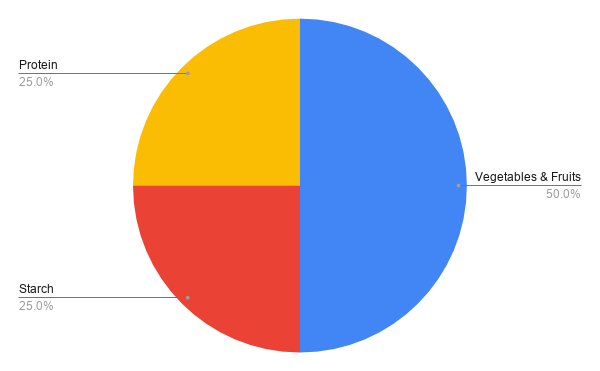
For meals try to incorporate 3-4 food groups and 1-2 food groups for snacks. Include a fruit or vegetable every time you eat to help you get the recommended intake of fruits and veggies. Also, try and balance carbs and proteins with each meal. Carbs are fast burning energy but proteins are slow burning energy, mixing the two together helps keep you full longer.
Make a Plan
It is easier to make healthy decisions when we already have the decisions made. For this reason it is really helpful to create a list of go to meals you can eat for breakfast, lunch, dinner, and snacks. Writing out a proper balance of the nutrients you need.
Start by splitting up your total calorie intake you need throughout breakfast, lunch dinner, and snacks. Breakfast usually needs the most amount of calories, but your situation may be different. Space calories out at times that your body needs them.
Make at least 3 different food plans you could eat for breakfast, lunch, dinner, and snacks. Take into account getting 3-5 of the food groups for meals and 1-2 for snacks. Count out the calories and make sure it matches the calorie intake you have set. These meals can be your go to meals so you don’t always have to count out your calories, and you know that the meal is nutrient complete for you.
Here is an example of how to make a meal (NOTE: your calorie intake might be different for breakfast, this is just an example.)
BREAKFAST (need 500 cal)
Food
Calories
Starch
Oatmeal,honey
300
Protien
Greek Yogurt
90
Vegetable
Fruit
Dairy
Milk
110
TOTAL
500
How is counting calories a sustainable way to lose weight?
Last week I touched on the topic of counting calories. For many people, they run away at the thought of this. How can something you need to log and count everyday be a sustainable form of weight loss?
I like to think of it like a budget. The best way to manage your money is to know where every cent is going. This helps you stay on target and save more money than you would otherwise. In the same manner counting calories shows you where all of your energy is going. When you know where all of your energy is going it’s easier to make changes.
Also, calorie counting isn’t something you need to do forever! As you count calories for a few months, you start to learn how much your body needs and you learn the general average amount of calories in the things you eat often. Sure there may be something new that you need to do a quick calculation on, but for the most part you can start to get a good estimate on your own of how many calories are in a meal.
Make a goal
Set a goal and keep referring back to this page as a help to create goals for upcoming weeks.
Habits change slowly so set one goal and be patient with yourself. If you find you slipped up and didn’t achieve your goal one day ask yourself this, “If I dropped a few coins on the ground and they fell into a place I couldn’t get, would I then take the rest of my contents of my wallet and dump that too?” This analogy can help remind you that it’s okay to slip up a little with your habits, and understand that it will happen at times.
Keep moving towards your goal, it will come. Be patient with yourself, and as always consult a registered dietitian. Now more than ever we need the help from registered dietitians because they have evidence based research on the best ways to lose weight and keep it off for the long term. They can help so much and should be one of the first places you go for help, not the last.
DISCLAIMER: Before starting a new diet or exercise program consult with your doctor before beginning. I am not a doctor, nutritionists or a dietitian. The information provided is based on my personal experience and education learned from a registered dietitian. I do not claim that the advice offered will guarantee results. Any recommendations I make should be discussed between you and a medical professional. Read more HERE
















 Juggling The Jungle