
How to create sustainable weight loss- Part 2

It is hard to sift through all the diets we have learned about on the internet, and most of us know diets aren’t sustainable over the long term. So, how do you find a way to create sustainable weight loss? In our last article we talked about creating habits for sustainable weight loss. This week we will focus on ways to create sustainable weight loss.

Control portion size

A big part of the reason so many Americans are overweight is because of our portion sizes. We assume we need way more to eat than we actually do. This can happen for a lot of different reasons. We over eat because we are bored, want to eat more of the food for taste, don’t know how much we need, or from having social pressures.

For these reasons it’s important to be able to find your satisfied point. This is the point during eating where you no longer feel hungry but you haven’t passed the “full” or “overstuffed” feeling yet. It’s good to consciously examine this while your eating so you can learn to find your satisfied point. This may mean limiting other distractions while you eat so you can focus on eating.

So many of our food problems come from the mind, so it is good to get a clear idea of why you might overeat. Write down some of the reasons you eat more than you need and then go through and research solutions you can take to avoid those situations. Here are a few examples to get you started.

Overeating at restaurants

  • When at a restaurant split your food in half before eating. Plan that this is what you will eat here and the rest will be for take out. If someone asks why you aren’t eating more just tell them you are “super full”.

A friend offers you a cinnamon roll

  • It is okay to say no. If you have a hard time with that you can also say i’m not hungry right now but I can save it for later. If the cinnamon roll is worth it to you, you can eat it later. If the cinnamon roll is not worth it to you, you can through it away later.
Chose food wisely

I had a friend who went on a diet where she didn’t eat sugar, and flour (of any kind). This sounded like a fun diet so I tried it for a week.

While it worked great for her, it didn’t work for me. It started to create this mentality that every time I slipped up and snacked on sugar I was hurting my body. The stress that this created was terrible and probably caused more harm to my body than it solved.

While elimination diets work for some, and need to work for others (People with specific allergies). I found out pretty early on that it didn’t work for me. Then I learned something great, you can eat eat the things you love and still lose weight.

There are foods and then there are better choices. A 20 calorie lollipop doesn’t have the same nutritional value as 20 calories of spinach. You can, however, still lose weight if you eat a lollipop instead of spinach. If you are staying within the calorie limit set and balancing it with the proper macro-nutrients it is okay to still eat the things you want.

You don’t need to beat yourself up. Having a mentality that some foods are “bad for you” can cause a lot of psychological problems. My one caveat to this is if you feel better not eating a certain thing, and it doesn’t cause you to binge on it later, go for taking it out of your diet. (I even highly encourage eliminating empty calorie drinks from your diet.) Just know that the thing making you lose weight is fewer calories you consume and not solely the food.

This is a really complicated subject. If you would like more information I highly recommend talking to a registered dietitian as they can help you with the psychological sides to food.

Tips and tricks:

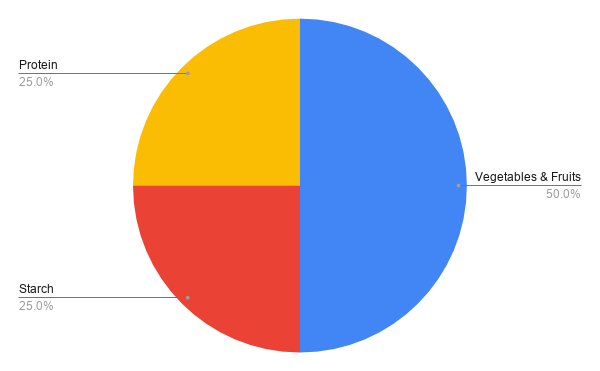
For meals try to incorporate 3-4 food groups and 1-2 food groups for snacks. Include a fruit or vegetable every time you eat to help you get the recommended intake of fruits and veggies. Also, try and balance carbs and proteins with each meal. Carbs are fast burning energy but proteins are slow burning energy, mixing the two together helps keep you full longer.
Make a Plan

It is easier to make healthy decisions when we already have the decisions made. For this reason it is really helpful to create a list of go to meals you can eat for breakfast, lunch, dinner, and snacks. Writing out a proper balance of the nutrients you need.

Start by splitting up your total calorie intake you need throughout breakfast, lunch dinner, and snacks. Breakfast usually needs the most amount of calories, but your situation may be different. Space calories out at times that your body needs them.

Make at least 3 different food plans you could eat for breakfast, lunch, dinner, and snacks. Take into account getting 3-5 of the food groups for meals and 1-2 for snacks. Count out the calories and make sure it matches the calorie intake you have set. These meals can be your go to meals so you don’t always have to count out your calories, and you know that the meal is nutrient complete for you.

Here is an example of how to make a meal (NOTE: your calorie intake might be different for breakfast, this is just an example.)

BREAKFAST (need 500 cal)FoodCalories
StarchOatmeal,honey300
ProtienGreek Yogurt90
Vegetable
Fruit
DairyMilk110
TOTAL500

How is counting calories a sustainable way to lose weight?

Last week I touched on the topic of counting calories. For many people, they run away at the thought of this. How can something you need to log and count everyday be a sustainable form of weight loss?

I like to think of it like a budget. The best way to manage your money is to know where every cent is going. This helps you stay on target and save more money than you would otherwise. In the same manner counting calories shows you where all of your energy is going. When you know where all of your energy is going it’s easier to make changes.

Also, calorie counting isn’t something you need to do forever! As you count calories for a few months, you start to learn how much your body needs and you learn the general average amount of calories in the things you eat often. Sure there may be something new that you need to do a quick calculation on, but for the most part you can start to get a good estimate on your own of how many calories are in a meal.
Make a goal

Set a goal and keep referring back to this page as a help to create goals for upcoming weeks.

Habits change slowly so set one goal and be patient with yourself. If you find you slipped up and didn’t achieve your goal one day ask yourself this, “If I dropped a few coins on the ground and they fell into a place I couldn’t get, would I then take the rest of my contents of my wallet and dump that too?” This analogy can help remind you that it’s okay to slip up a little with your habits, and understand that it will happen at times.

Keep moving towards your goal, it will come. Be patient with yourself, and as always consult a registered dietitian. Now more than ever we need the help from registered dietitians because they have evidence based research on the best ways to lose weight and keep it off for the long term. They can help so much and should be one of the first places you go for help, not the last.

DISCLAIMER: Before starting a new diet or exercise program consult with your doctor before beginning. I am not a doctor, nutritionists or a dietitian. The information provided is based on my personal experience and education learned from a registered dietitian. I do not claim that the advice offered will guarantee results. Any recommendations I make should be discussed between you and a medical professional. Read more HERE


Save for later on Pinterest:
Creating habits for sustainable weight loss – Part one

We are currently living in a world full of a lot of information. This information can make it super difficult to know what is true and what is not. I wanted to find a healthy solution to eating so I learned from many of these random sources and tried eliminating things from my diet. There became a point on my journey trying to find truth from fiction that the only conclusion I came to was that everything is bad for you except vegetables! Surely all food couldn’t be as terrible as everyone say’s it is, right? I then sought out a dietitian because I realized I was creating an unhealthy relationship with food.

The things I learned from my registered dietitian were really valuable, and helped me have a positive viewpoint on food again. Here are some of the things I learned and how I personally went about applying them. Hopefully the things written here can help you too! However, I highly recommend finding a registered dietitian who can give you more advice as I am not a medical professional and don’t know all of your particular dietary needs. You can also go to nutrition blog network which is a place to find reliable nutrition blogs written by registered dietitians.

Weight management:

The first thing you need to know is that the concept for weight management is pretty simple. (Doesn’t mean it’s easy though!) If a person takes in more energy than their body uses the result will be weight gain. Whereas, if they don’t put in as much energy in as they take out it will result in weight loss.

Energy in > Energy out = Weight Gain

Energy in < Energy out = Weight Loss

How to lose weight:

To lose weight you need to put in less calories (energy) than the total energy you spend in a day. This TDEE calculator can help you determine how many calories your body needs to maintain the weight it is currently at. (TDEE: Total daily energy expenditure.) To lose weight and create a calorie deficit subtract 500 from your TDEE. This will give you the calories you need to consume in a day to lose weight.

Next, you’ll want to find your resting metabolic rate. The calculator I linked above should also calculate that for you. Your resting metabolic rate is the amount of calories your body needs to function properly. If you consume below this amount of calories it will put your body into starvation mode. This is something you don’t want for sustainable weightless as it’s unhealthy for your body and usual results in consuming more food in the future. Your sustainable weight loss goal should be to lose 1 lb a week.

Eat Regularly

Eat within 30 minutes of waking up. Your body has gone without food all night and will need to eat when you wake. Eating right when you wake up helps prevent overeating for the rest of the day. Your body needs to eat every 4-6 hours so set an eating schedule from the time you wake up, to the time you go to bed. Some people don’t need to eat as frequently as others. Pay attention to your body and eat when your hungry. Snacks are definitely encouraged! Generally for me I eat a meal, snack, meal, snack, meal, snack throughout the day, but some people may need more or less than this.

To plan an eating schedule start from the time you wake up then pay attention to the time when you start to feel hungry. Make note of this time and go eat. Do this over the course of a week and you’ll learn the right time for your body to eat. It helps if you have a consistent time you wake up.

Sustainable Habits

Sustainable weight loss is about creating sustainable habits. When starting out with any new habit it takes time. Adding a lot of new habits at the beginning can be overwhelming, Which is why I’ve broken this article into parts. It is important to only focus on one thing at a time. Pick one thing and work on it till it becomes a habit and then move to the next. Sustainable weight loss takes A LOT of time and patience. You wont see dramatic results immediately but that’s okay, that is healthy, that is sustainable. Just keep going and trust in the process because it does work.

Note: Personally I don’t suggest adding exercise to this weight loss plan at the beginning, unless you already exercise. Yes exercise is good to do but you can lose weight without exercising. This is where I feel like people get overwhelmed. They want to do everything and change everything all at once which is an unsustainable way of building habits. Pick one thing at a time and work from there.

Make a goal:

Look through this article and make a goal of what you will work on this week. Chose at least one goal but no more than 3. Studies have shown that trying to make more than 3 things at a time into a habit doesn’t work as well.

Suggestion for this weeks goal: Once you’ve done the calculations needed to find the number of calories you need to consume to achieve your weight loss goal the next thing I would recommend is getting a calorie counting app like my plate or MyFitnessPal. And for the next week focus on logging everything you eat and drink. This is the only thing you have to focus on. Don’t worry about exercise, don’t worry about how healthy the food your eating is. Just focus on counting calories. Remember that you are learning a lot of new things right now, and it’s okay to not be perfect.

Find an accountability Partner

Find someone who can help hold you accountable. This can be a spouse, friend, co-worker, dietitian, etc. Tell this person the goal that you have and ask them to check back in with you next week to see how you did.

Stay tuned next week for part 2

I’ve broken out this article into parts to encourage sustainable habits. Set a goal and apply it this week and next week we will learn about how to plan a list of go to healthy food combinations you can eat, and portion control.

DISCLAIMER: Before starting a new diet or exercise program consult with your doctor before beginning. I am not a doctor, nutritionists or a dietitian. The information provided is based on my personal experience and education learned from a registered dietitian. I do not claim that the advice offered will guarantee results. Any recommendations I make should be discussed between you and a medical professional. (To read more about this disclaimer click here – Disclaimer )

Meal Planning Overview – The Bulk Method

First browse what you have/clean out bad food.

Go through your fridge and see what you have. This is also the perfect time to toss out old food and clean out the fridge. Try not to let food go bad, freeze food that you don’t think you’ll eat before it goes bad. These make excellent lunches for later. Don’t be afraid to freeze food even if you think it might not freeze. With a little bit of experimentation you’d be surprised the things you can freeze. *** Freezers are friends for your food ***

Make a list of things on sale at your grocery stores.

Go through and write out things that are on sale at your grocery store alongside the things already in your fridge. This can help plan what to make for your “free meals” (“free meal concept is explained in the next paragraph!) and maybe you can change up a few ingredients to your “consistent meals” to change them up every now and then. Good sale on bell peppers? Try putting them on your homemade pizza.

Make a menu ( or a two week rotating menu )

For this menu you will write down 12 meals that you already know how to cook/make/like to eat. Give yourself a “free day” every week to try out a new food to put variety in your diet. If you find that you really like the new food you can replace it with one of the other 12 foods you’ve chosen that has lasted its stay. This is how planning 12 go to meals won’t drive you crazy! There’s still variety and trust me, it is enough.

When writing the menu I only plan dinners. I make sure I cook enough dinner that there will be leftovers for lunch the next afternoon. Decision fatigue is a real thing. The less decisions you make for yourself the more likely you will be to stick to a plan.

Once you have your menu set write out all the ingredients you will need to buy at the store. Here you will write it out in two sections “Bulk Items” and “Normal Perishable Items.” Write down everything you think you would get a better deal on if you bought it in bulk.

Shop bulk (Budget from a different place.)

*** If you are not confident that you will love the menu you have skip this step till you know it is a menu you will love. Save up money while waiting to find your dream menu. *** You will need to budget money ahead of time for this one. Guesstimate how much money it will take to buy these items in bulk and figure out where you will budget this money from. You are stocking your pantry right now which costs a bit upfront but once you have these things on hand you will spend much less money and time. *** Don’t be afraid to freeze things and be patient***

Shop normal

These are the things on the list you would prefer not to buy in bulk for one reason or another. Fresh foods, cheese, whatever. Don’t buy this for both weeks. ***Just buy for the week you are currently on. It helps free up the fridge.***

Ingredient prep

***Prepare as much as you can. Freeze what you can. You’ll be surprised what you can do.***

Once you get that massive amount of food home the first thing you should do is set a game plan of how you will go through all of your bulk food and do what you need to do. If you bought a bunch of meat freeze it. If you bought that meat for a specific purpose you can season the meat now. Trust me it works really well. Then, brain storm through all of the foods you have and get creative on how you can save it or prepare it for later. The goal is to set it up so that on cooking day there is not much work that needs to go into cooking it. Think about making it into a T.V. dinner or something of comparable simplicity.