
It is hard to sift through all the diets we have learned about on the internet, and most of us know diets aren’t sustainable over the long term. So, how do you find a way to create sustainable weight loss? In our last article we talked about creating habits for sustainable weight loss. This week we will focus on ways to create sustainable weight loss.

Control portion size
A big part of the reason so many Americans are overweight is because of our portion sizes. We assume we need way more to eat than we actually do. This can happen for a lot of different reasons. We over eat because we are bored, want to eat more of the food for taste, don’t know how much we need, or from having social pressures.
For these reasons it’s important to be able to find your satisfied point. This is the point during eating where you no longer feel hungry but you haven’t passed the “full” or “overstuffed” feeling yet. It’s good to consciously examine this while your eating so you can learn to find your satisfied point. This may mean limiting other distractions while you eat so you can focus on eating.
So many of our food problems come from the mind, so it is good to get a clear idea of why you might overeat. Write down some of the reasons you eat more than you need and then go through and research solutions you can take to avoid those situations. Here are a few examples to get you started.
Overeating at restaurants
- When at a restaurant split your food in half before eating. Plan that this is what you will eat here and the rest will be for take out. If someone asks why you aren’t eating more just tell them you are “super full”.
A friend offers you a cinnamon roll
- It is okay to say no. If you have a hard time with that you can also say i’m not hungry right now but I can save it for later. If the cinnamon roll is worth it to you, you can eat it later. If the cinnamon roll is not worth it to you, you can through it away later.
Chose food wisely
I had a friend who went on a diet where she didn’t eat sugar, and flour (of any kind). This sounded like a fun diet so I tried it for a week.
While it worked great for her, it didn’t work for me. It started to create this mentality that every time I slipped up and snacked on sugar I was hurting my body. The stress that this created was terrible and probably caused more harm to my body than it solved.
While elimination diets work for some, and need to work for others (People with specific allergies). I found out pretty early on that it didn’t work for me. Then I learned something great, you can eat eat the things you love and still lose weight.
There are foods and then there are better choices. A 20 calorie lollipop doesn’t have the same nutritional value as 20 calories of spinach. You can, however, still lose weight if you eat a lollipop instead of spinach. If you are staying within the calorie limit set and balancing it with the proper macro-nutrients it is okay to still eat the things you want.
You don’t need to beat yourself up. Having a mentality that some foods are “bad for you” can cause a lot of psychological problems. My one caveat to this is if you feel better not eating a certain thing, and it doesn’t cause you to binge on it later, go for taking it out of your diet. (I even highly encourage eliminating empty calorie drinks from your diet.) Just know that the thing making you lose weight is fewer calories you consume and not solely the food.
This is a really complicated subject. If you would like more information I highly recommend talking to a registered dietitian as they can help you with the psychological sides to food.
Tips and tricks:
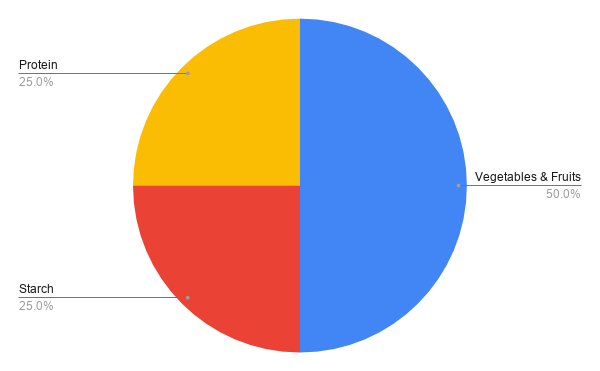
For meals try to incorporate 3-4 food groups and 1-2 food groups for snacks. Include a fruit or vegetable every time you eat to help you get the recommended intake of fruits and veggies. Also, try and balance carbs and proteins with each meal. Carbs are fast burning energy but proteins are slow burning energy, mixing the two together helps keep you full longer.
Make a Plan
It is easier to make healthy decisions when we already have the decisions made. For this reason it is really helpful to create a list of go to meals you can eat for breakfast, lunch, dinner, and snacks. Writing out a proper balance of the nutrients you need.
Start by splitting up your total calorie intake you need throughout breakfast, lunch dinner, and snacks. Breakfast usually needs the most amount of calories, but your situation may be different. Space calories out at times that your body needs them.
Make at least 3 different food plans you could eat for breakfast, lunch, dinner, and snacks. Take into account getting 3-5 of the food groups for meals and 1-2 for snacks. Count out the calories and make sure it matches the calorie intake you have set. These meals can be your go to meals so you don’t always have to count out your calories, and you know that the meal is nutrient complete for you.
Here is an example of how to make a meal (NOTE: your calorie intake might be different for breakfast, this is just an example.)
| BREAKFAST (need 500 cal) | Food | Calories |
|---|---|---|
| Starch | Oatmeal,honey | 300 |
| Protien | Greek Yogurt | 90 |
| Vegetable | ||
| Fruit | ||
| Dairy | Milk | 110 |
| TOTAL | 500 |
How is counting calories a sustainable way to lose weight?
Last week I touched on the topic of counting calories. For many people, they run away at the thought of this. How can something you need to log and count everyday be a sustainable form of weight loss?
I like to think of it like a budget. The best way to manage your money is to know where every cent is going. This helps you stay on target and save more money than you would otherwise. In the same manner counting calories shows you where all of your energy is going. When you know where all of your energy is going it’s easier to make changes.
Also, calorie counting isn’t something you need to do forever! As you count calories for a few months, you start to learn how much your body needs and you learn the general average amount of calories in the things you eat often. Sure there may be something new that you need to do a quick calculation on, but for the most part you can start to get a good estimate on your own of how many calories are in a meal.

Make a goal
Set a goal and keep referring back to this page as a help to create goals for upcoming weeks.
Habits change slowly so set one goal and be patient with yourself. If you find you slipped up and didn’t achieve your goal one day ask yourself this, “If I dropped a few coins on the ground and they fell into a place I couldn’t get, would I then take the rest of my contents of my wallet and dump that too?” This analogy can help remind you that it’s okay to slip up a little with your habits, and understand that it will happen at times.
Keep moving towards your goal, it will come. Be patient with yourself, and as always consult a registered dietitian. Now more than ever we need the help from registered dietitians because they have evidence based research on the best ways to lose weight and keep it off for the long term. They can help so much and should be one of the first places you go for help, not the last.
DISCLAIMER: Before starting a new diet or exercise program consult with your doctor before beginning. I am not a doctor, nutritionists or a dietitian. The information provided is based on my personal experience and education learned from a registered dietitian. I do not claim that the advice offered will guarantee results. Any recommendations I make should be discussed between you and a medical professional. Read more HERE
Save for later on Pinterest:
 Juggling The Jungle
pretty sound advice.
LikeLike